Is SEO Worth It for a Small Business in 2026? An Honest Answer
TL;DR: For most local and service businesses, SEO is worth it. It reaches people the moment they search, and once you rank the leads keep coming without paying per click. It is a 6 to 12 month build, so it is worth it when you can commit. If you need sales this week, pair it with paid ads.
“Is SEO worth it?” is a fair question, especially when every agency says yes. This is an honest answer from someone who sells SEO but will also tell you when it is the wrong fit. The short version: for most local and service businesses it is one of the best-value investments there is, but only if you can play the long game. Here is when it pays off, when it does not, and how to judge the return.
Quick answer: Yes, SEO is worth it for most small businesses, because it brings people who are already searching for what you sell, and it keeps working after you stop paying, unlike ads. The catch is time. It takes about 6 to 12 months for a real return, so it is worth it when you can commit to that timeline and to the content and reviews it needs.
Key takeaways
- SEO reaches ready buyers. People searching “plumber near me” want to hire, now.
- It compounds. A page that ranks keeps earning leads long after the work is done.
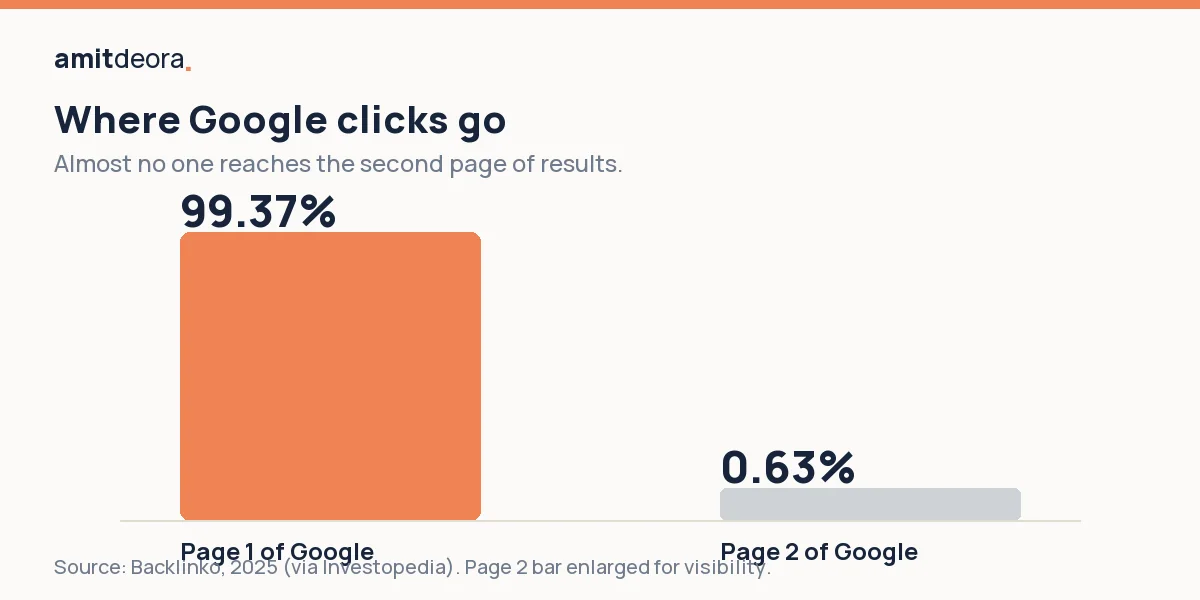
- Page one is almost everything. Only 0.63% of people click to the second page of Google.
- It is slow. Budget 6 to 12 months for a real return, and judge it on leads, not traffic.
Why SEO is worth it for most small businesses
The core reason is intent. Someone typing “emergency electrician [town]” or “best accountant near me” is not browsing. They want to hire, and they want to hire soon. SEO puts you in front of that person at the exact moment they are ready. Few other channels can say that.
The second reason is that page one is where all the action is. According to a 2025 Backlinko study cited by Investopedia, only 0.63% of Google users click a result on the second page. If you are not on page one for the searches that matter, you are invisible to almost everyone. SEO is how you get there.
The third reason is that it compounds. Paid ads stop the second you stop paying. A page that ranks keeps bringing leads for months, even years, with no cost per click. Over time, SEO often becomes the cheapest source of leads a local business has.
The small-business edge
You might think big brands always win search. For local and specific searches, they do not. Small businesses have real advantages:
- Local SEO is your secret weapon. For “near me” searches, a well-run Google Business Profile and real reviews can beat a national brand. Google reports that 76% of people who search for something nearby on their phone visit a business within a day.
- Long-tail keywords favor focus. You will not beat a giant for “insurance”, but you can win “pet insurance for older dogs in [city]”. These specific terms have lower volume and far higher intent.
- Trust travels further for small brands. A real face, real reviews and genuine expertise build the trust that both Google and buyers reward.
When SEO is not worth it
Here is the honest part most agencies skip. SEO is a poor fit when:
- You need sales this week. SEO is a build, not a switch. If cash flow needs leads right now, start with paid ads.
- Your margins cannot wait. If the business cannot survive 6 months without a return from this channel, SEO is the wrong first bet.
- You will not commit. SEO needs steady content, reviews and patience. If that will not happen, the money is better spent elsewhere.
- Your market has almost no search demand. A few niches genuinely are not searched for. Keyword research tells you fast.
In these cases, be honest with yourself and start with a channel that fits. You can always add SEO once there is room to invest in the longer game.
SEO or paid ads: which is better?
This is the wrong question. They do different jobs, and the best answer for most small businesses is both.
| SEO | Paid ads | |
|---|---|---|
| Speed | Slow, 3 to 12 months | Instant |
| Cost over time | Drops as pages rank | Constant, per click |
| What happens when you stop | Keeps working | Stops immediately |
| Best for | Durable, lower-cost leads | Quick wins and testing |
Use ads to switch on leads now and to test which terms convert. Use SEO to build a channel that keeps paying after the ad budget stops. They work better together than either does alone.
How to measure if SEO is worth it
Judge SEO on money, not traffic. Rankings and visits are early signs. The numbers that matter are:
- Cost per enquiry. What you spend divided by the leads it brings.
- Customers won. How many of those leads become paying clients.
- Lifetime value. What a client is worth over time, against what SEO cost to win them.
Set up simple conversion tracking so you can see which pages and searches bring real enquiries. A page that ranks but books nothing is not worth it. A page that brings two good clients a month usually pays for the whole campaign.
What it looks like when it works
I will give you a real example rather than a promise. A professional-services consultancy I worked with grew inbound leads about 4 to 5 times (client-reported) over six months with local and organic search. A fresh-food e-commerce brand reached 10 or more orders a day from search. In both cases the spend was worth it because the leads kept coming long after the work was done. That is the real test of whether SEO is worth it: does it keep paying back? You can see more in my case studies.
The bottom line
For most local and service businesses, SEO is worth it, because it reaches ready buyers and keeps working after you stop paying. It is not worth it if you need sales this week, cannot wait 6 months, or will not commit to the work. Judge it on leads and revenue, not traffic, and pair it with ads for the quick wins. Done right, it becomes the cheapest, most durable lead channel you have. For what it costs, see how much SEO costs, and for what you get at each price, SEO packages explained.
Want an honest view on whether SEO is worth it for your specific business? I am one click away.
Frequently asked questions
Is SEO worth it for a small business in 2026?
For most local and service businesses, yes. SEO reaches people at the exact moment they search for what you sell, and once you rank you keep getting clicks without paying for each one. It is a slow build, usually 6 to 12 months for a real return, so it is worth it when you can commit to that timeline. If you need leads this week, pair it with paid ads.
What is the ROI of SEO?
SEO has no fixed return, but it compounds. Unlike ads, which stop the moment you stop paying, a page that ranks keeps bringing leads for months or years. The way to measure it is cost per enquiry and customers won over 6 to 12 months, not traffic. For many local businesses it becomes their cheapest source of leads over time.
When is SEO not worth it?
SEO is a poor fit when you need sales this week, when your margins cannot wait 6 months for a return, or when you will not commit to the content and reviews it needs. A brand-new business with no budget runway is often better off starting with paid ads for quick leads, then adding SEO once there is room to invest in the longer game.
Is SEO better than paid ads?
They do different jobs. Paid ads switch on instant traffic but stop when the budget stops. SEO builds slowly but keeps working after you stop paying. The best answer for most small businesses is both: ads for quick wins and testing, SEO for durable, lower-cost leads over time. They work better together than either alone.
Can a small business do SEO without an agency?
Yes, the basics. You can claim your Google Business Profile, ask for reviews, and improve your page titles yourself. Those alone help a lot. The harder work, like keyword research, content and technical fixes, is where many owners bring in help to save time. You can start solo and add support as it grows.